Find out how Canada’s Public Service Professionals help keep you safe
When you trust your food, medicine, or infrastructure, public service professionals are behind the scenes protecting you.
It takes experts to run a country.
When wildfire smoke fills the air, scientists are tracking it.
When you board a plane or cross a bridge, engineers have made sure it’s safe.
When your food is safe to eat and your medicine works, experts are behind that too.
Public service professionals are the experts responsible for Canada’s critical systems—reducing risk, catching problems early, and ensuring reliability.
When experts are cut, risk increases. Less inspection and monitoring allow small problems to become serious failures.
This is how the cuts of today become the crises of tomorrow.
Meet the experts at the heart of Canada’s
Hugo Landry
Computer Scientist
Hugo develops wildfire smoke forecasting models at Environment and Climate Change Canada. His work helps communities and local authorities make informed decisions to protect public health when conditions change quickly.
Mahammadu Abdulai
Veterinarian
Mahammadu inspects meat production at the Canadian Food Inspection Agency to ensure food is safe to eat. His work protects everyone’s health by catching problems before contaminated food reaches the table.
Elizabeth Bonner
Hydrographic Chart Supervisor
Elizabeth maps the ocean floor at the Canadian Hydrographic Service to identify hazards like rocks and shipwrecks. This data supports safe navigation, tsunami modelling, and early warnings that protect lives along Canada’s coasts.
Brendan Olynik
Explosives Inspector
Brendan works as part of a small team that regulates explosive precursor chemicals across Canada. His job is to prevent dangerous materials from falling into the wrong hands and reduce the risk of serious public safety incidents before they occur.
Simone Zobotar
Tax Avoidance Auditor
Simone investigates complex tax avoidance schemes used by the wealthiest individuals. Her work tracks money hidden across vast corporate networks around the globe. By stopping these schemes, she returns hundreds of millions of dollars to fund public services.
Murray Perrett
Fisheries Manager
Murray manages fisheries along Labrador’s coastline to ensure fish stocks don’t collapse. His work supports long-term sustainability, food security, and the livelihoods of coastal communities and Indigenous nations that depend on healthy fisheries.
Magali Merkx-Jacques
Analyst
Magali works on strategic planning for scientific and technological systems that Canada relies on now and in the future. Her role helps ensure that standards and emerging technologies are developed with long-term reliability, security, and public interest in mind.
Brendan Murdoch
Aerospace Engineer
Brendan analyzes flight recorder data and transportation investigations at the Transportation Safety Board. His work helps explain why accidents happen and prevents future failures across air, rail, marine, and pipeline systems.
Sunny Wang
Regional Development Engineer
Sunny is an engineer responsible for critical military facilities across BC. His work spans armouries, storage for ships and aircraft, and operational infrastructure. He warns that replacing in-house engineering with contractors raises costs and reduces accountability.
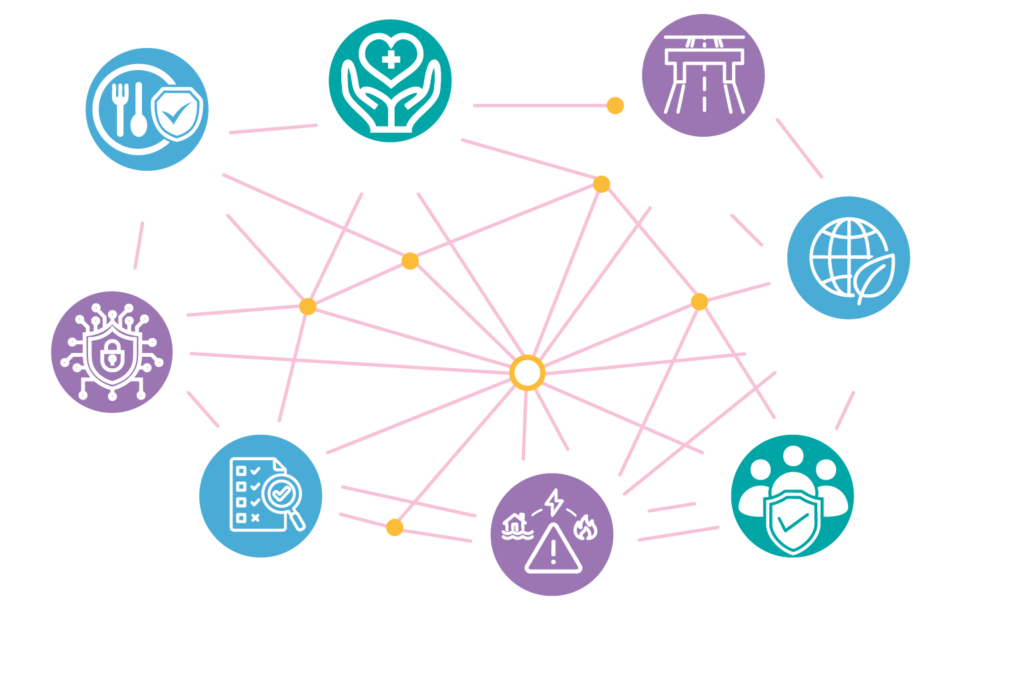
What are Canada’s critical systems ?
Public service professionals work at the heart of more than 100 critical systems. From food safety and drug approvals to infrastructure inspections, wildfire monitoring, and cybersecurity, they protect the foundations of daily life in Canada.
Food & Health.
Ensuring the food you eat and medicines you take are safe and effective.
Data & Cybersecurity.
Protecting the data and digital systems you depend on to function safely.
Infrastructure & Transport.
Inspecting bridges, dams, planes, and vessels to prevent failures.
Oversight & Compliance.
Enforcing the rules that keep markets and taxes fair—and the public protected.
Environment & Climate.
Monitoring weather, climate, and air quality to help communities prepare.
Emergency Preparedness.
Forecasting hazards and planning responses so systems work when emergencies hit.
Food safety is a critical system—and it’s at risk.
Food inspection experts at the Canadian Food Inspection Agency (CFIA) have been warning that they are already stretched thin, even as recalls and contamination alerts become more frequent.
Now the federal government is moving ahead with widespread cuts to the experts who test and inspect our food. These cuts will eliminate close to one million hours of food inspection, laboratory, and surveillance work every year—significantly increasing the risk of contaminated food entering our supply chain.
At a time when food inspection capacity is being weakened in the United States, Canada should be strengthening its own safeguards, not reducing them. Canada’s ability to expand and diversify trade depends on importing countries having confidence in CFIA’s inspection systems.
For the safety of everyone we know—and for the credibility of Canada’s food exports—we need a critical system like the CFIA to function with strength and confidence.
Add your name to say Canada should strengthen food safety—not cut it.
Cuts to experts don’t save money – they increase risk.
Problems are found later
When expert inspection and testing are reduced, issues aren’t prevented—they’re discovered later. Food contamination, drug safety issues, and system failures are harder to contain once harm has already occurred, increasing both public risk and the cost of the response.
Maintenance is deferred
Cutting in-house engineers and technical staff often leads to deferred maintenance. Small, manageable issues in infrastructure and facilities accumulate over time, turning routine upkeep into major repairs that cost more and carry greater safety risks.
Work is contracted out
When public service expertise is hollowed out, the work doesn’t disappear—it’s typically contracted out. High-profile failures like the ArriveCAN app and the Phoenix Pay system demonstrate how contracting-out can drive up costs, weaken accountability, and leave governments without the in-house expertise needed to manage complex systems.
Systems become fragile
As public expertise is lost, systems lose the people who understand how they work and how to fix them. IT, data, and safety systems become more fragile, with longer outages, slower recovery, and higher risk during emergencies.
Add your name to say Canada should strengthen food safety—not cut it.
Food inspection workers have warned they are already struggling to keep up, even as recalls increase. Eliminating nearly one million hours of inspection and surveillance work each year makes it harder to catch contamination early and prevent unsafe food from reaching store shelves.